
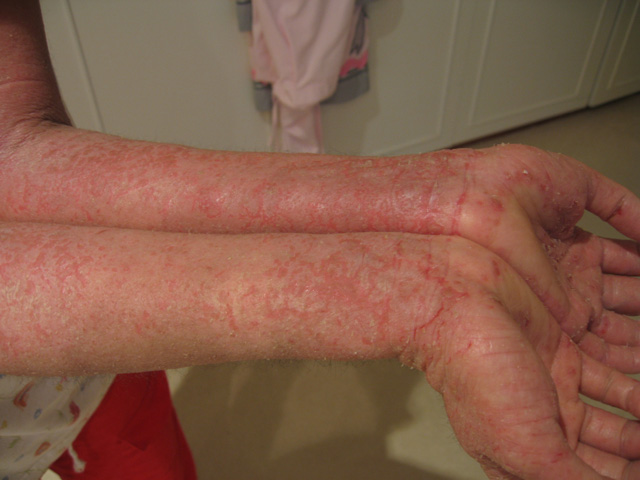
So many parents feel guilty and confused if their child develops eczema, and yet there is no identified cause for eczema, so there is absolutely nothing they could have done, or not done, to change the likelihood of their child having eczema.
What is eczema?
It’s just a hot, dry, itchy rash that reddens the skin. Because it’s itchy, children scratch and when they scratch, the scratched area may become infected with bacteria, worsening the eczema.
What makes eczema happen?
We don’t know, apart from the fact that if there’s a family history of skin conditions, eczema is more likely. We know children tend to outgrow eczema, and we’re not sure why, expect that as they grow, they have a larger surface area of skin, which may allow them to experience any surface reaction less intensely, and we also believe that children just get better at avoiding triggers and letting parents and nannies know as soon as they get the ‘prickle’ that says an attack is on its way, so treatment can be given more quickly. But it’s still a bit of a mystery.
On the other hand, we know exactly what makes eczema worse: heat, dryness and itchiness. Understanding these factors can help you help your child.
Heat
Caused by too many clothes, too warm housing or travel in hot cars or on stuffy public transport, overheating is a major contributor to outbreaks of eczema. By dressing an affected child in thin layers of cotton, silk or linen clothing, you can much more easily adjust their temperature – avoid wool and synthetic fabrics. When travelling by car, use sunshades on the windows to protect your child. Keep heating to a minimum and give your child a battery operated hand fan to use in the car if they are old enough to use it safely.
Bedtime can be tricky because parents worry their child will get cold at night, but an open window (high enough not to present a problem), a thin cotton blanket or a lightweight sleeping bag will help a child with eczema to get a good night’s sleep. Avoid woollen blankets, plastic mattress protectors, electric blankets and hot water bottles.
Dryness
It can be very difficult for a parent to get their head around dressing a child in wet clothes or putting wet bandages on their skin, but these two treatments really help! Dry air and dry skin both contribute to eczema, so ensuring these are addressed can help your child be more comfortable. Don’t have radiators in your child’s room heated at night, and you might choose to put a vaporiser in the child’s room to add moisture to the atmosphere.
Children cannot catch a cold from being cold, so try not to worry about this old wive’s tale. A hand-sprayer filled with tap water can be a useful way of dampening clothing and many children will benefit from being put to bed in a slightly damp vest or being given a spray to apply to clothing worn for PE at school. Unscented moisturiser is a must, and special skin washes that are emollient and soothing will also be useful.
Itchiness
One major problem for parents – school! Wool blazers and itchy jumpers are both bad news for eczema, but that’s not all. Children seated next to heating can be triggered into an eczema attack, as can those who overheat during PE sessions. Having a frank discussion with school, and providing some documentary evidence, can be helpful.
One of our best nanny candidates told us a great story about joining a family where one child had eczema that flared up frequently. Nanny decided to keep a detailed diary of all the child’s food, contacts and activities and within a couple of weeks had pinpointed the problem – the violin tutor who came to the home! Each week this woman would stand behind the child to reposition the violin and bow, and each week her fabric conditioner would trigger the child’s eczema. So unscented washing liquid/powder and fabric softener are a must. And this may not be environmentally acceptable, but tumble-dried clothes tend to be much softer than line-dried ones. Apply the cheek test for itchiness – any clothing that tickles or scratches your face will be liable to bring on an eczema outbreak in your child.