
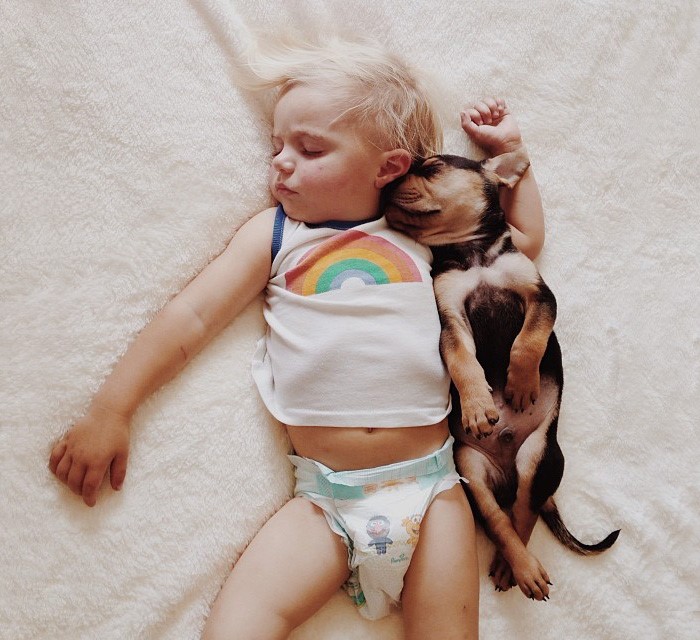
Many families believe that children need animals to help them build relationships and understand such concepts as empathy, care of others and even discipline. But what do you need do to ensure your child and your pet are both safe and happy?
Dogs, children and nanny
Around 2,000 children in the UK are treated for dog bites every year. 80% of those bites come from dogs that are well known to the child. To ensure your dog is safe around children you should.
- Take it to obedience classes. This is a good idea periodically anyway, as it reminds you, as well as your dog, how to behave! You can book a one-to-one session for an older dog with an experienced trainer who will ensure your dog hasn’t developed bad habits.
- Give your nanny training in how to control your dog. When a new person enters the household a dog decides on where they fit in the pecking order. Your nanny needs to be at the top. Alongside you and any other adults so the dog must be trained to respect her.
- Use baby gates to keep children’s rooms ‘dog free’. This allows both dogs and children to have time outs from each other. Especially important when one or the other is under the weather.
Cats as pets for children
Cats are unlikely to attack, but boy, can they lash out! Teach your child to know the warning signs. Such as a lashing tail, flat ears and even a growl. Check your cat regularly for ticks and fleas. Also have an enclosed litter box so that your child can’t come into contact with its faeces. If your cat is a hunter, make sure it can’t bring its prey back into the house. Or is at least limited to one room. Which shouldn’t be the kitchen. Wild animals carry a range of diseases you don’t want in your food preparation area. Pregnant women should avoid contact with cats as they can cause toxoplasmosis.
Small animals and your child – how to have a happy household
- Birds are a fun pet but you must ensure you child doesn’t open the cage and let the bird fly away. A birdcage needs cleaning daily and that may be something your nanny is happy to do, or not. Be clear about pet care when you select your nanny because it’s not necessarily part of her job and she may not have the experience or desire to be a pet-carer.
- Rodents are popular but harder work than you might think. Many are nocturnal which means they are exciting and cute just when your child needs to be winding down to bed so avoid chinchillas, for example. Guinea pigs and rabbits are happy to be handled, while gerbils and mice are more likely to nip, or even worse, get squeezed in over-enthusiastic little hands. A small pet needs to be handled for at least twenty minutes a day or they rapidly revert to wild, shy ways which make them prone to bite or scratch. Again, not every nanny is happy to take on this task, so expect to take on your share of small animal care if you’re determined to have a caged pet.
- Fish are perhaps the easiest pets, but they present their own problems – such as needing regular water changes, chemical use to maintain the correct hygiene and even if all that is perfectly maintained, there will be regular and distressing deaths (they just don’t live very long, in general) so its important to maintain a fishtanks well.